GLP-1 has become so synonymous with obesity treatment that we use the term (imprecisely) to describe an entire class of drugs. But a new animal study from scientists closely tied to the development of multi-receptor obesity medicines asks a provocative question: what happens if you remove GLP-1 and the weight loss barely flinches?
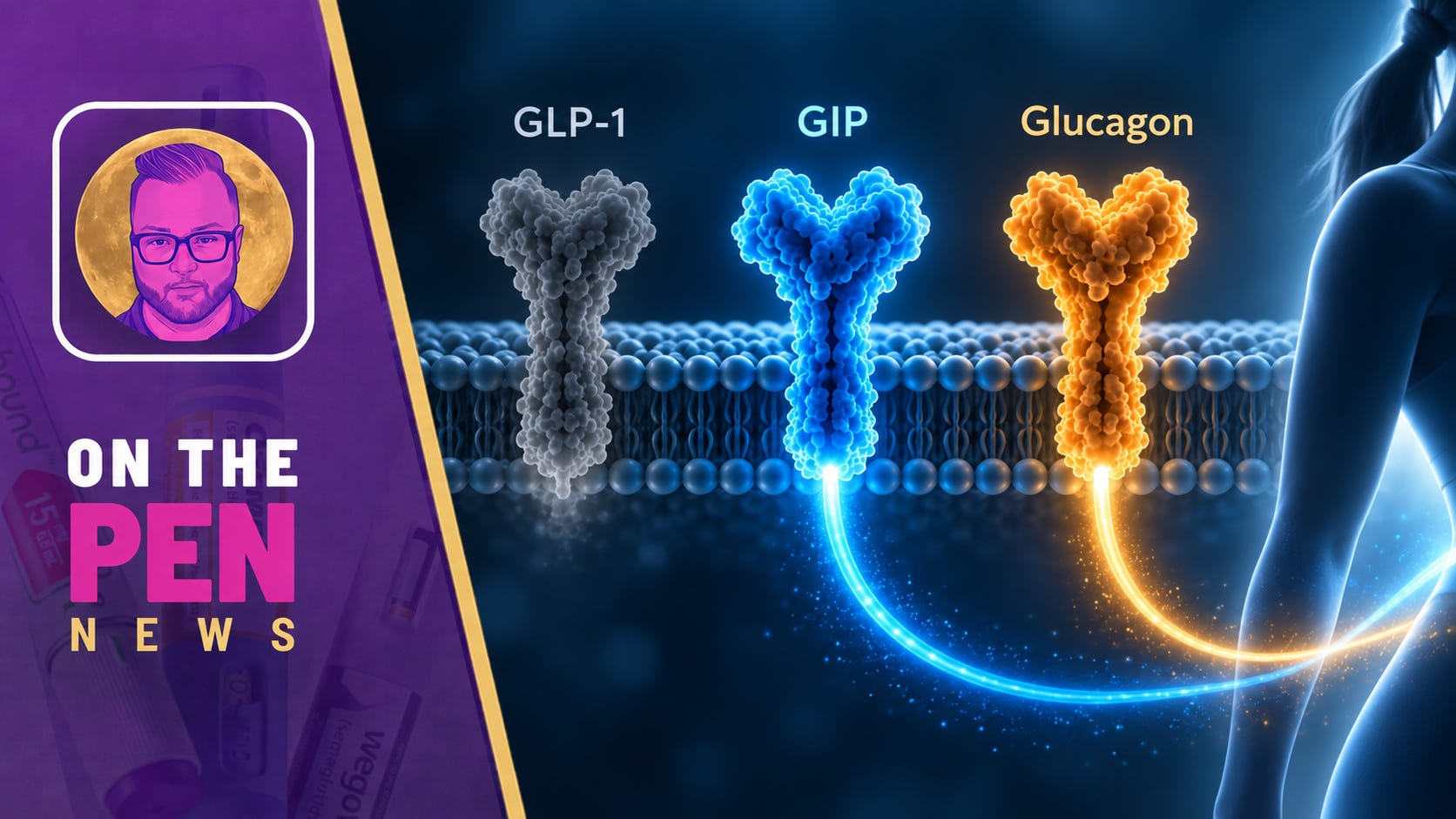
Researchers found that combining GIP and glucagon receptor agonism could still produce dramatic appetite suppression, metabolic improvements and massive weight loss in obese rodents. The finding may tell us something important about how retatrutide works, but it also raises a bigger question: if we take GLP-1 out, what else might we lose besides its side effects?

Retatrutide Without the GLP-1
Researchers first gave retatrutide to mice without functional GLP-1 receptors. The drug still drove major reductions in food intake and body weight, although substantially higher doses were required.
They then tested GIP and glucagon agonists separately and together. Each produced modest weight loss alone, but the combination was far more powerful, producing roughly 37% weight loss relative to controls at the highest tested dose.
The team then created BWB3054, a single molecule designed to strongly activate GIP and glucagon while having more than 100-fold less GLP-1 activity than retatrutide. In obese mice and rats, it produced substantial appetite suppression, glucose improvements and weight loss that, at sufficient doses, approached retatrutide.
The study also suggests this was not simply an exercise in making animals eat less. Researchers reported improvements in triglycerides, cholesterol, liver fat and metabolic signaling, strengthening the case that GIP and glucagon together may be doing much more than previously appreciated.
There was also an early tolerability signal. In a tiny monkey experiment, BWB3054 reached much higher drug exposures without the same transient appetite and gastrointestinal effects seen with tirzepatide and retatrutide. With only two monkeys per group, however, that is a reason to keep studying the molecule, not evidence that humans will tolerate it better.
Weight Loss Is Only Half the Question
This is where the paper gets more interesting. GLP-1 agonism is no longer valuable simply because it helps people lose weight.
Semaglutide reduced major cardiovascular events by 20% in the SELECT trial among people with overweight or obesity and established cardiovascular disease without diabetes. GLP-1 drugs are also being studied and used across cardiovascular, kidney, liver and other metabolic diseases, while researchers continue trying to untangle how much of those benefits come from weight loss versus GLP-1 signaling itself.
That creates a potentially important tradeoff. A future GIP/glucagon drug could theoretically match retatrutide on the scale and still fail to reproduce some of the broader protection associated with GLP-1 receptor agonism.
The new study gives us encouraging metabolic signals, including improvements in liver fat and blood lipids. What it cannot tell us is whether removing GLP-1 preserves protection against heart attacks, strokes, kidney disease or other long-term complications.
There is another unanswered question around the heart. Both GIP and glucagon signaling can influence heart rate, something the researchers acknowledge will need to be carefully evaluated as this approach moves forward.
So the lesson here is not that obesity medicine is suddenly moving away from multi-receptor drugs. It is almost the opposite. As these medicines become more sophisticated, researchers will need to understand exactly what each receptor contributes, not only to weight loss, but to the health outcomes patients ultimately care about.
Patient Takeaways
This study does not mark the beginning of GLP-1 obsolescence, and BWB3054 is nowhere near hitting your local pharmacy. Most of this work was done in rodents, with only a very small primate experiment looking at early tolerability. Now for the obligatory: animal studies are not human studies
What it does hint towards is that GIP and glucagon may deserve far more credit for the potency of drugs like retatrutide than previously assumed. Their interaction appears capable of producing powerful appetite suppression and weight loss even when GLP-1 signaling is largely removed.
But patients should watch what happens beyond the scale. If researchers can eventually deliver retatrutide-like weight loss with fewer gastrointestinal side effects while preserving cardiovascular and metabolic protection, that could be a major advance.
If removing GLP-1 also removes benefits we are only beginning to understand, however, 25% or 30% weight loss will not tell the whole story. The future of obesity medicine will not simply be about which drug produces the biggest number, but which combination of receptors produces the healthiest patient.