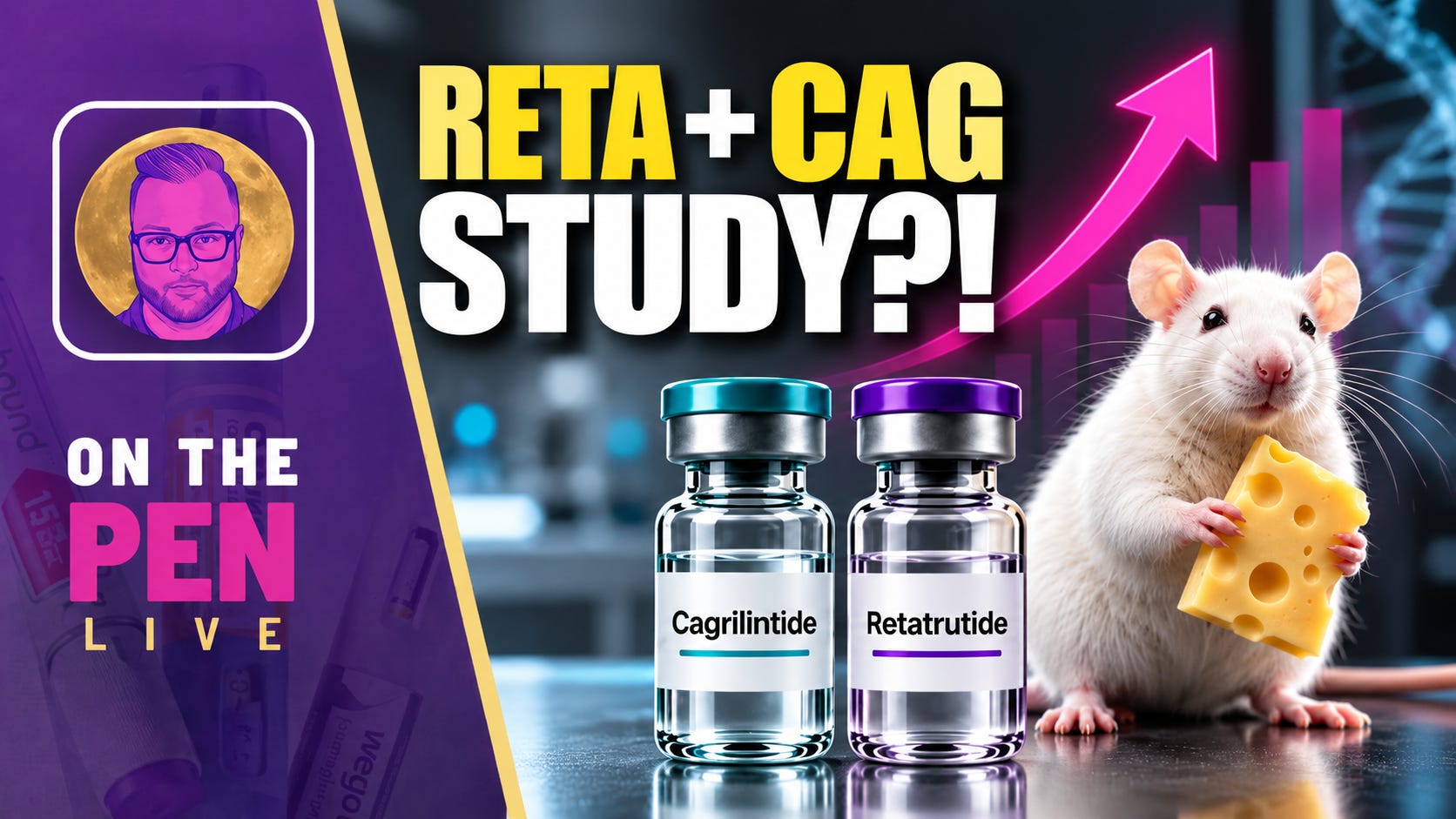
A new Nature Metabolism study may have given us one of the clearest looks yet at where obesity medicine is headed next. Researchers combined retatrutide, which targets GLP-1, GIP and glucagon receptors, with cagrilintide, which targets amylin and calcitonin receptors, effectively creating five-receptor pharmacology in obese male rats.

Watch Today’s Livestream 👇:

https://www.youtube.com/live/1Gc2OZcMTgA?is=UAbJ0XwXigljqhuy

The combination produced substantially greater weight loss than either drug alone, along with improvements in cholesterol, triglycerides and insulin. More importantly, pair-feeding and weight-matching experiments suggested the enhanced weight loss could not be explained by reduced food intake alone, leading the authors to specifically point toward five-receptor polypharmacology as a possible blueprint for future single-molecule drugs.

Novo Already Has All Five Receptors Working in Humans

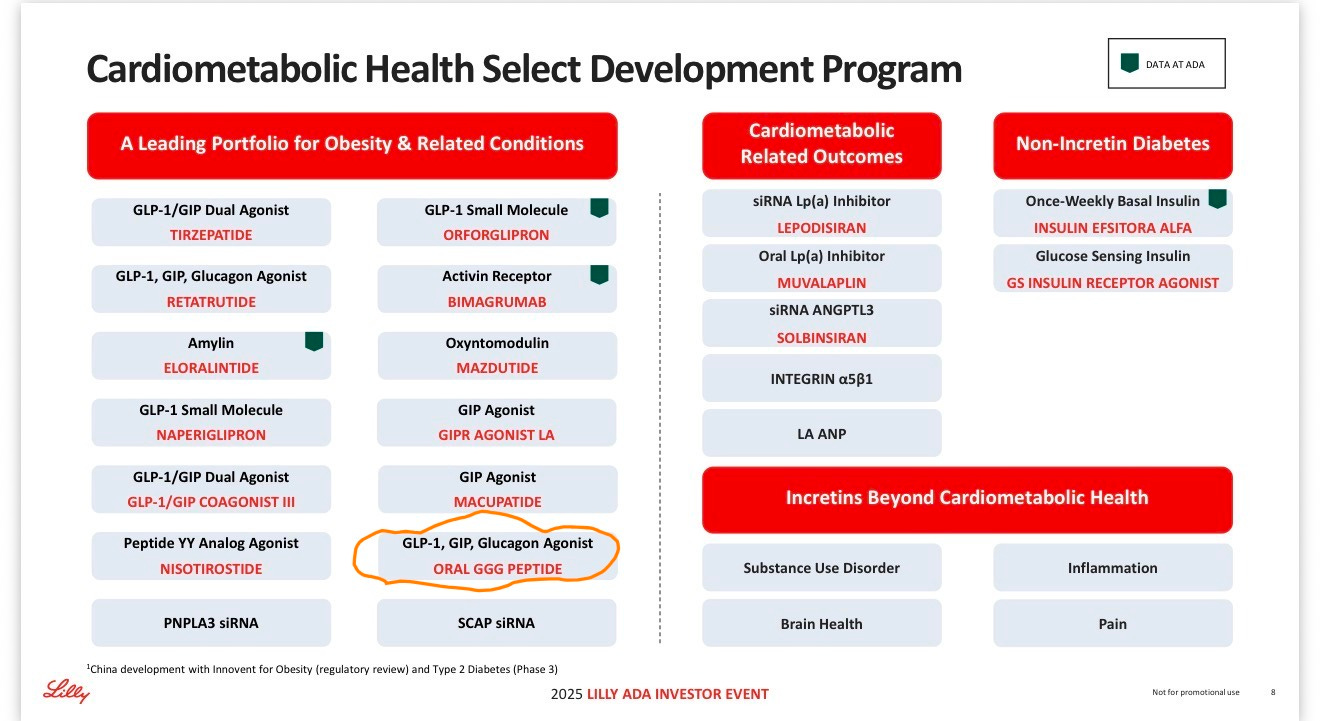
This is where the study gets much more interesting. Novo already has human clinical experience with all five receptor pathways highlighted in this animal experiment, just not together in the same drug.

UBT251 targets GLP-1, GIP and glucagon, and it already has compelling phase 2 obesity data from China. In 205 adults with overweight or obesity, the triple agonist produced up to 19.7% mean weight loss after 24 weeks, compared with placebo, giving Novo a strong early human signal across the same three pathways targeted by retatrutide.

Cagrilintide supplies the other side of the equation through amylin and calcitonin receptor activity, and Novo has already tested that biology extensively in humans. Novo has not announced a UBT251 plus cagrilintide combination, and there are no human data showing that activating all five pathways together would recreate what researchers saw in rats.

But activating these receptors themselves are not just theoretical. Novo effectively has all five operating in human development programs already. Just not together.

The timing is also interesting. Novo announced a new partnership with Anthropic aimed at using Claude to accelerate drug discovery and development, while the FDA this week launched its Expedited IND Pilot, designed to shorten the path between identifying a promising drug candidate and beginning first-in-human testing without changing the agency’s safety oversight.

That does not mean a quintuple agonist suddenly appears in a clinical trial next year, though it wouldn’t surprise me at all. It definitely means the tools for designing increasingly complicated drugs, and potentially moving them toward humans more efficiently, are advancing at the same time researchers are beginning to show why five-receptor biology might be worth pursuing.

What This Means for Patients, Including the People Already Experimenting

There is serious reality sitting underneath this story. People using gray-market peptides have already been combining retatrutide and cagrilintide, along with other incretin and amylin combinations, long before this paper appeared.

This specific study was conducted in obese male rats, not people, and it does not give us definitive data about the safety, dosing, tolerability or long-term consequences of combining these drugs in humans. The new paper should not immediately be interpreted as evidence that people should start stacking them.

But it does highlight something patients have repeatedly shown the pharmaceutical industry: when people believe a treatment gap exists, some will begin experimenting before the formal clinical-development system catches up. Those folks often refer to themselves as “researchers”, and this trial is an indication that the moniker might not be too far off.

The best takeaway for most of our readers is what could eventually come from that biology under proper clinical study. Instead of patients having to piece together multiple experimental products on their own, drugmakers may eventually be able to engineer GLP-1, GIP, glucagon, amylin and calcitonin activity into a deliberately balanced therapy, potentially even a single molecule.

That is where this story becomes much more important than a wild rat weight-loss chart. Six months ago, talking about a quintuple agonist sounded like looking far beyond retatrutide. Today, Novo has human data covering all five receptor systems, researchers have demonstrated what those pathways can do together in animals, and the infrastructure for moving new molecules toward human trials is getting faster.

One thing is for certain, the next generation of obesity medicine is already taking shape.