Before getting to the headline number, one distinction is essential: this was a type 2 diabetes trial. Every participant had type 2 diabetes.

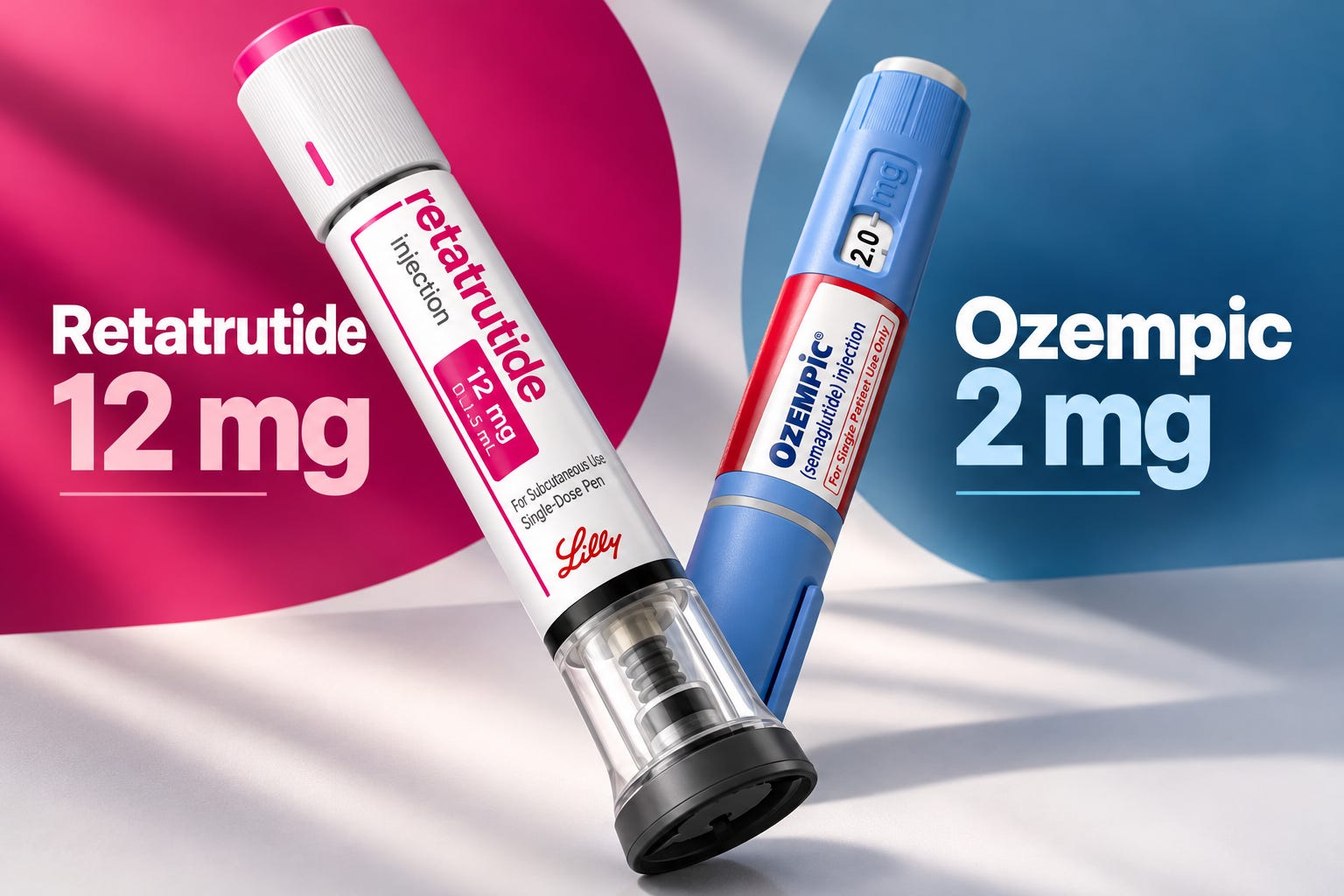
Lilly’s Phase 3 TRANSCEND-T2D-2 trial enrolled 1,298 adults whose diabetes remained inadequately controlled on metformin, with or without an SGLT2 inhibitor. Their average A1C was 8.3%, average weight was 225.8 pounds and average BMI was 36.8. Participants received retatrutide 9 mg, retatrutide 12 mg or Ozempic 2 mg for 80 weeks.
That matters for understanding the comparison. Ozempic is approved for type 2 diabetes, not obesity, and 2 mg is its highest approved dose. This was not retatrutide versus Wegovy in a general obesity population. It was retatrutide versus the highest approved Ozempic dose in people with diabetes.
With that context, the results are still striking.
Retatrutide more than doubled the weight loss
People taking retatrutide 9 mg lost an average of 44.3 pounds, or 19.5% of body weight. At 12 mg, average loss reached 47.4 pounds, or 20.9%.
The Ozempic 2 mg group lost 20.9 pounds, or 9.4%.
Retatrutide also won on glucose control, although the gap was much smaller. Both retatrutide doses reduced A1C by 2.2 percentage points, compared with 1.8 points for Ozempic.
That combination is notable because people with type 2 diabetes have historically tended to lose less weight on incretin therapies than people without diabetes in obesity trials. Retatrutide still approached 20% average weight loss in this population while improving A1C beyond Ozempic.
Lilly also reported greater improvements with retatrutide in non-HDL cholesterol, triglycerides and systolic blood pressure, although the complete dataset has not yet been published or presented.
The 9 mg versus 12 mg comparison may be just as interesting
The biggest retatrutide dose produced the biggest weight-loss number, but the incremental benefit was relatively modest.
Going from 9 mg to 12 mg increased average weight loss from 19.5% to 20.9%, about 3.1 additional pounds. A1C improvement did not increase at all. Both doses lowered A1C by the same 2.2 percentage points.
At the same time, discontinuations because of adverse events rose from 4.8% at 9 mg to 7.9% at 12 mg. Ozempic’s rate was 2.7%.
Several side effects also increased at the higher retatrutide dose. Diarrhea rose from 28.3% to 32.7%, nausea from 21.2% to 23.8%, vomiting from 10.2% to 15%, and dysesthesia from 4.8% to 6.5%.
That does not prove 9 mg is the optimal dose. We need the full dataset, and individual responses will vary considerably. But it highlights an increasingly important question in obesity medicine: how much additional efficacy is worth trading for additional side effects?
The best medication for a person is not necessarily the drug capable of producing the largest average weight-loss percentage at its maximum dose. It is the treatment that controls their disease, remains accessible, and is tolerable enough to stay on long-term.
Ozempic 2 mg is not the ceiling for semaglutide
There is another important qualification to the “twice the weight loss of Ozempic” headline.
Using Ozempic 2 mg makes sense in a diabetes trial because it is the highest approved Ozempic dose. But 2 mg is no longer the ceiling for injectable semaglutide in obesity treatment.
The FDA approved Wegovy HD 7.2 mg for chronic weight management in 2026. That is 3.6 times the amount of semaglutide used in the 2 mg Ozempic arm of this trial.
In Novo Nordisk’s STEP UP obesity trial, semaglutide 7.2 mg produced 20.7% average weight loss among participants taking treatment as intended. That number looks very similar to retatrutide’s 20.9%, but these are not comparable head-to-head results. The trials involved different populations, and TRANSCEND-T2D-2 consisted entirely of people with type 2 diabetes.
The accurate conclusion from today’s study is therefore narrower and stronger: retatrutide produced more than twice the average weight loss of Ozempic 2 mg in adults with type 2 diabetes.
It has not proven that retatrutide produces twice the weight loss of semaglutide generally.
The 20.9% number also comes with statistical fine print
Lilly reported the headline results using an efficacy estimand. In simple terms, this estimates what efficacy would look like if participants remained on their assigned treatment through 80 weeks, allowing for dose interruptions or modifications and without prolonged use of additional glucose-lowering medication.
That is useful for understanding what the drug can do when treatment is maintained. It is not exactly the same as asking what happened to every randomized participant regardless of discontinuation or additional therapy.
That distinction becomes especially relevant when the 12 mg group produced the highest efficacy number while also having the highest adverse-event discontinuation rate.
Efficacy and persistence are not competing ideas. They are two parts of the same treatment.
Retatrutide is showing what a third pathway may add
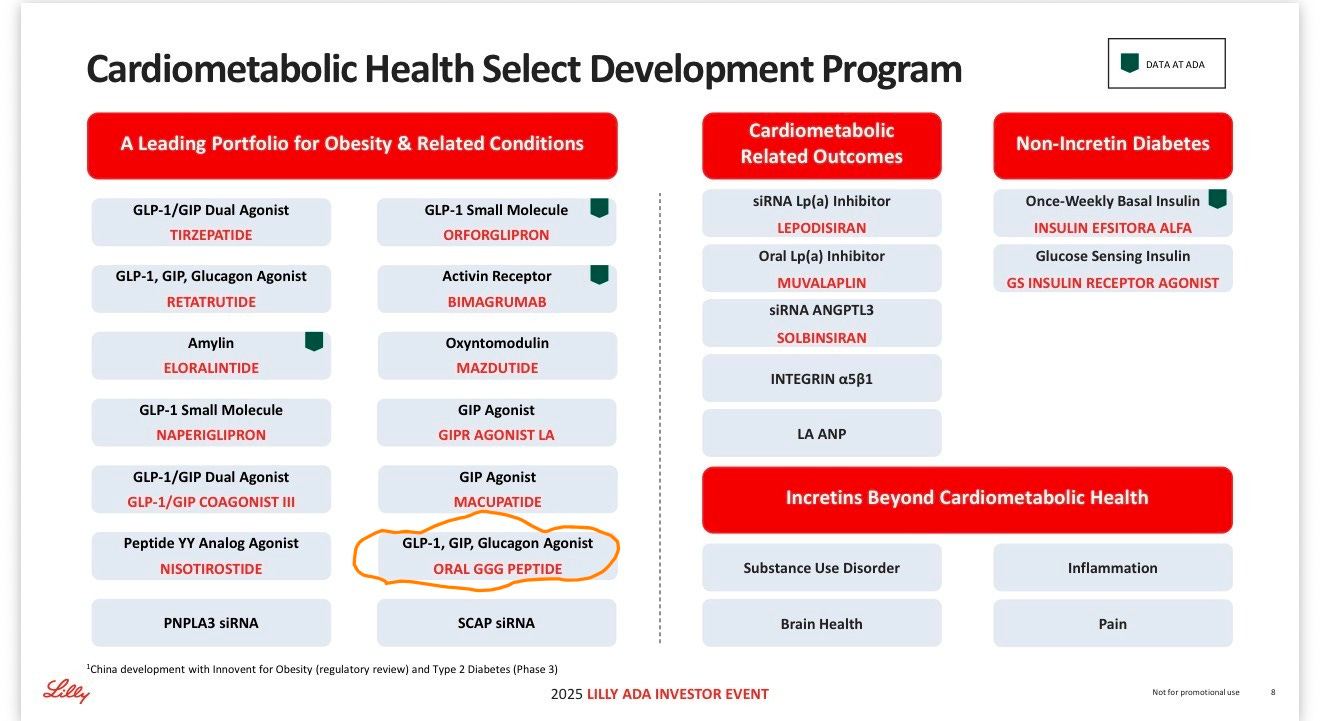
Semaglutide activates GLP-1 receptors. Tirzepatide activates GIP and GLP-1. Retatrutide activates GIP, GLP-1 and glucagon receptors.
The theory behind retatrutide is that adding glucagon receptor activity may further influence energy expenditure and metabolism while GIP and GLP-1 contribute to appetite regulation and glucose control.
TRANSCEND-T2D-2 gives Lilly something more meaningful than another placebo-controlled win. Retatrutide has now outperformed an established incretin medication in a randomized Phase 3 head-to-head diabetes trial.
The next comparison may be even more consequential. Lilly is also studying retatrutide directly against tirzepatide in TRIUMPH-5, which should give us a clearer picture of whether adding glucagon receptor activity meaningfully moves the field beyond today’s GIP/GLP-1 drugs.
Patient Takeaways
Today’s headline needs one sentence of context attached to it: retatrutide produced roughly 20% to 21% average weight loss versus 9.4% with Ozempic 2 mg in a trial made up entirely of adults with type 2 diabetes.
That is an impressive result, particularly because retatrutide also lowered A1C more than Ozempic. But it does not establish that retatrutide produces twice the weight loss of every form or dose of semaglutide. The obesity market now includes Wegovy 7.2 mg, with many diabetics using higher doses of Semaglutide off-label.
The dose data may also foreshadow an important shift in how we think about these medications. Retatrutide 12 mg produced slightly more weight loss than 9 mg, but A1C improvement was identical and more patients discontinued because of adverse events.
As obesity medications become more powerful, the goal should not simply be pushing every patient toward the highest possible dose or the largest possible weight-loss number.
Patients do not live inside clinical-trial averages. They have to take these medications week after week, potentially for years.
The best medication for an individual patient may ultimately be the one that provides enough benefit, at a dose they can tolerate, at a cost they can access, for long enough to change the course of their disease.