A QUICK FAVOR BEFORE WE GET INTO TODAY’S NEWS!
On The Pen has made it to the quarterfinals of the Top Host competition, and YOUR FREE VOTE could help us get one step closer to winning!On The Pen was built to make obesity medicine news accessible to everyone, and winning would help us bring that mission to an even bigger audience.
I’d be incredibly grateful for your support.
It takes just a few seconds to vote!
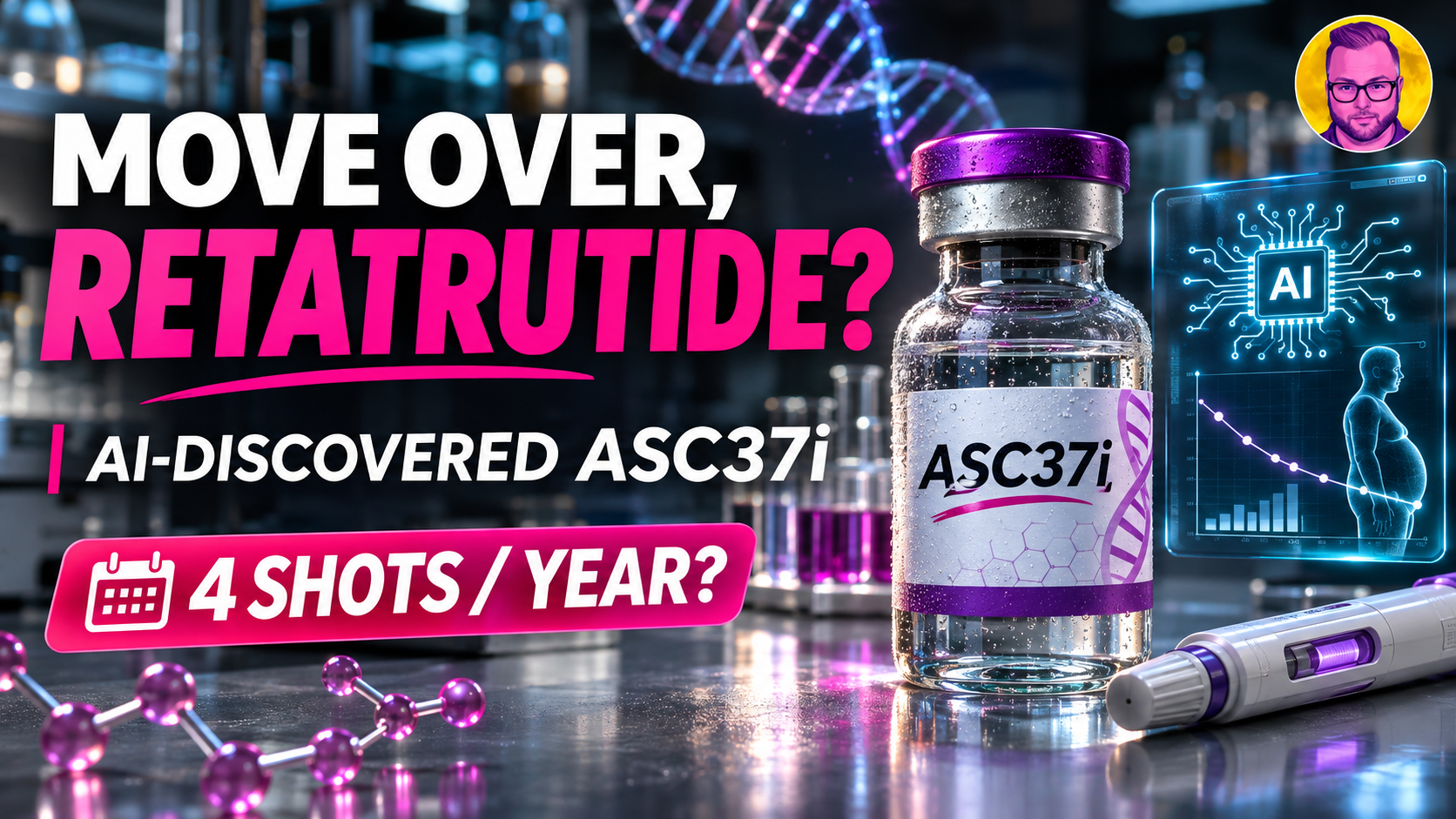
The next generation of obesity medications might require just FOUR injections per YEAR? Not weekly, not even monthly, but potentially once every three months. The craziest part of this story is that artificial intelligence played a role in discovering the molecule that could make this possible!
Today, Ascletis Pharma announced that its experimental obesity medication, ASC37i, has officially entered Phase 1 clinical trials in the United States. And while we’re still a long way from knowing whether this medication will be tolerable and safe in humans, some of the early findings are pretty remarkable.
Move Over, Retatrutide?
ASC37i is a triple agonist targeting GLP-1, GIP, and glucagon, the same three hormone receptors targeted by Eli Lilly’s investigational medication retatrutide. But Ascletis is pursuing something that could distinguish its medication from other treatments in development: an extraordinarily long duration of action.
According to the company, its underlying ASC37 molecule demonstrated an average half-life seven times longer than retatrutide in preclinical research. In studies involving mice with diet-induced obesity, ASC37 produced up to 41.5% body weight reduction, with the company reporting 88% greater relative weight reduction compared with tirzepatide.
Those are some pretty extraordinary numbers, but we need to keep them in perspective. These were studies in mice, not humans, and we’ve seen plenty of promising obesity drugs look incredible in animals only to produce very different results in clinical trials. Looking at the side effect profile of retatrutide, particularly elevations in heart rate (attributed to glucagon receptor activation), this feels like a fairly large hurdle to overcome.
Artificial Intelligence Helped Discover It
One of the more fascinating aspects of this announcement is how Ascletis developed the medication. The company used its proprietary AI-assisted Structure-Based Drug Discovery platform to help discover and develop ASC37, combining artificial intelligence with its ultra-long-acting drug development technology.
The resulting ASC37i formulation uses a specialized delivery system designed to slowly release the medication following injection. Ascletis believes this could eventually support dosing once monthly or even once quarterly, potentially reducing the number of injections from 52 per year with a conventional weekly medication to just four.
For people living with obesity, this is about more than convenience. We’re talking about a chronic disease that often requires lifelong management, and the possibility of substantially reducing the frequency of treatment could make maintaining therapy easier for some patients. Of course, fewer injections won’t mean much if the medication isn’t effective, tolerable, affordable, and accessible.
The Next Generation Is Already Coming
ASC37i has now entered its first human clinical trial, where researchers will evaluate safety, tolerability, and how the drug behaves in the body. We don’t yet know how much weight people will lose, whether quarterly dosing will actually work, or what the side-effect profile might look like. Those answers will require clinical data, and we’re only at the beginning.
With all of these advancements, I can’t help but think about the millions of people who have spent their lives carrying not only the weight of obesity, but people who were asked to fight biology with willpower, as though hunger could be conquered through obedience. For decades, we blamed patients for what science had not yet learned to understand. Every new discovery reminds us just how much suffering might have been spared had we asked better questions sooner.
Whether ASC37i lives up to its promise remains to be seen. But the possibility of advancements like this offer something far greater than convenience. It represents a future where medicine finally begins to shoulder more of the burden we’ve spent generations placing on patients. And that is a future worth covering.